
When building a local search strategy, business owners often face an important question: should they focus on local citations or backlinks? Understanding local citations vs backlinks is essential because the two signals serve different purposes, even though both can improve online visibility, authority, and organic search performance.
A local citation helps search engines verify the identity, location, and contact details of a business. A backlink, on the other hand, connects one website to another and can help build website authority, referral traffic, and trust.
The strongest local SEO strategies do not treat citations and links as interchangeable. They use both in a deliberate way. Citations establish a reliable business footprint across directories and platforms, while backlinks strengthen the authority and relevance of the business website.
In this guide, we will explain the differences between local citations vs backlinks, how search engines may interpret them, when businesses should prioritize each one, and how to combine them into a practical local SEO campaign.
What Are Local Citations?
Local citations are online mentions of a business’s core information. Most structured citations include the business name, address, and phone number, commonly referred to as NAP information. A complete listing may also include the website URL, opening hours, business categories, photos, services, and a short description.
Citations commonly appear on:
- General business directories
- Local directories
- Industry-specific platforms
- Chamber of commerce websites
- Social media profiles
- Mapping and navigation services
- Review platforms
- Local blogs and news websites
For example, a plumbing company may have listings on major national directories, a regional business directory, a local chamber website, and platforms dedicated to home services. Each accurate listing gives customers another way to discover the company while reinforcing its business information online.
Structured citations usually appear in a standardized business-listing format. Unstructured citations are mentions found inside articles, press releases, event pages, sponsorship announcements, or other editorial content.
If you want a more detailed introduction to their formats and benefits, read this guide explaining what local citations are.
What Are Backlinks?
Backlinks are clickable links that direct users from an external website to your website. They may point to the homepage, a location page, a service page, a blog post, or another useful resource.
A local business could earn backlinks from:
- Local news publications
- Industry associations
- Suppliers and business partners
- Community organizations
- Sponsorship pages
- Local bloggers
- Professional directories
- Event websites
- Relevant educational resources
Backlinks are generally associated with website authority, discovery, referral traffic, and organic search visibility. However, their value depends on quality and context. A relevant link from a trusted regional publication may be more useful than dozens of unrelated links from low-quality websites.
The best backlink is not simply one that comes from a website with impressive metrics. It should also make sense for the business, its audience, its industry, or its geographic market.
Local Citations vs Backlinks: The Key Differences
The main difference in the local citations vs backlinks comparison is what each signal communicates.
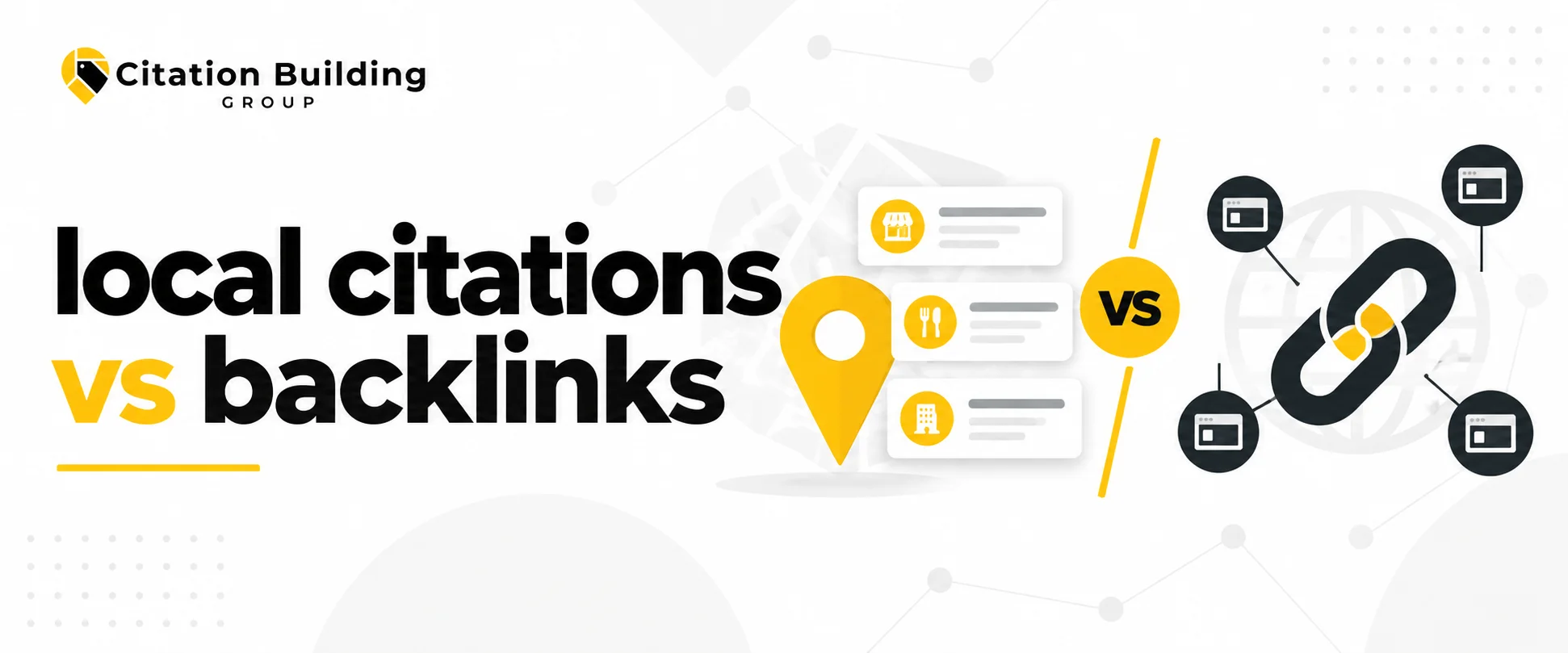
A citation primarily confirms that a business exists and provides consistent identity and location information. A backlink creates a direct connection between websites and may transfer authority, relevance, visitors, and discovery signals.
| Area | Local Citations | Backlinks |
|---|---|---|
| Primary purpose | Confirm business identity and location | Build website authority and referral paths |
| Link required | No | Yes |
| Typical information | Business name, address and phone number | Clickable anchor text and destination URL |
| Common sources | Directories, maps and business platforms | Blogs, publications, organizations and partner sites |
| Main SEO role | Local verification, consistency and visibility | Authority, relevance and organic visibility |
| Customer benefit | Helps customers find accurate business details | Directs customers to useful website content |
| Quality consideration | Accuracy, relevance and platform trust | Editorial quality, relevance and website trust |
A citation can contain a website link, but that does not make citations and backlinks identical. The listing remains valuable as a citation because of its business information, while its URL may provide an additional link or referral benefit.
Similarly, a backlink may mention the business without displaying a complete address or phone number. In that situation, it functions primarily as a link rather than a complete local citation.
How Citation SEO Signals Support Local Visibility
The most important citation SEO signals are usually connected to accuracy, consistency, relevance, and coverage. When a business appears with consistent information across reputable platforms, search engines can compare those mentions and develop greater confidence in the entity behind them.
Important citation SEO signals include:
Consistent NAP Information
The business name, address, and phone number should follow a consistent format. Minor formatting variations are not always a problem, but conflicting information can create uncertainty for both search engines and customers.
For example, an old telephone number on one directory and a new number on another can lead to missed calls. Multiple listings with different addresses may also confuse customers trying to visit the business.
Geographic Relevance
Listings on trusted country, city, state, or regional directories can connect a business with a particular service area. Geographic relevance is especially important for companies targeting customers in defined locations.
Industry Relevance
A citation from a respected niche directory may provide stronger contextual value than an unrelated general listing. Restaurants, lawyers, contractors, healthcare providers, real estate businesses, and other industries often have specialized platforms customers use when comparing providers.
Listing Completeness
Detailed listings can be more useful to potential customers. Business categories, opening hours, service descriptions, photos, and website information provide additional context and may improve engagement with the listing.
Platform Quality
Submitting a business to every available directory is not automatically an effective strategy. Trusted, relevant, active platforms deserve priority. Quality control is therefore a central part of building meaningful citation SEO signals.
How Backlinks Support Local SEO
Backlinks help search engines discover pages and understand relationships between websites. They can also indicate that other publishers, organizations, or businesses consider a website valuable enough to reference.
For local companies, backlinks can support:
- Website authority
- Organic rankings for service-related searches
- Location-page visibility
- Referral traffic
- Brand awareness
- Content discovery
- Geographic and industry relevance
A roofing company that earns a link from a regional property publication receives more than a technical SEO signal. The link can send relevant visitors, connect the business with its market, and increase exposure among potential customers.
However, effective local SEO link building depends on relevance and legitimacy. Purchased links from unrelated websites, automated link networks, and large volumes of spammy links can create risk without producing meaningful business value.
A sustainable campaign should focus on links that make sense outside SEO. If a link could introduce the business to real customers, support its reputation, or help readers access useful information, it is usually more valuable than a link created only to manipulate rankings.
Citations and Backlinks: Where Do They Overlap?
The relationship between citations and backlinks is not always completely separate. Many directory citations include a clickable link to the listed business. Local sponsorship pages may contain the business name, service area, and website URL. Editorial articles can also include both NAP information and a backlink.
This overlap means one placement can sometimes provide several benefits:
- It confirms business information.
- It creates another discovery point.
- It sends visitors to the website.
- It connects the business with a location or industry.
- It may strengthen brand recognition.
- It may support website authority.
Nevertheless, businesses should avoid judging every directory by the backlink alone. Some respected platforms use nofollow links or redirect URLs. A listing can still be valuable if it helps customers find the business, reinforces accurate information, or improves visibility on a platform relevant to the target market.
When evaluating citations and backlinks, consider the complete value of the placement rather than relying on one technical metric.
Local Links Versus Citations: Which Should You Build First?
The choice between local links versus citations depends on the current condition of the business’s online presence.
A new business usually benefits from establishing its core citations early. Search engines and customers need reliable information about the company before more advanced promotional campaigns can deliver their full value.
Citation building should also be prioritized when:
- The business has recently changed its address.
- The company has a new phone number.
- Multiple duplicate listings exist.
- Directories display inconsistent business names.
- Important profiles are incomplete.
- The business has expanded into a new country or city.
- Customers are reaching outdated contact information.
Backlinks may deserve greater attention when the business already has accurate listings but its website lacks authority or struggles to rank for competitive service keywords.
Local link building should be prioritized when:
- Competitors have stronger regional link profiles.
- Important service pages receive little organic traffic.
- The business publishes valuable content that has not earned exposure.
- The company participates in community activities that are not mentioned online.
- Local partners could provide relevant referrals.
- The website needs stronger industry authority.
In practice, the local links versus citations decision does not have to be absolute. A company can build or correct foundational citations while developing partnerships, content, and community campaigns that generate relevant backlinks.
Local Citations vs Backlinks: Which Is More Important?
There is no universal winner in the local citations vs backlinks debate. Their importance depends on the business’s starting point, competition, location, and goals.
Citations are particularly important for establishing accurate business information and increasing visibility across platforms where local customers search. Backlinks are especially helpful for developing the authority and organic visibility of the business website.
Consider a new dental clinic. Before investing heavily in content promotion, the clinic should make sure its correct name, address, phone number, hours, and website appear on appropriate directories and healthcare platforms. Once that foundation is established, links from local publications, health organizations, professional associations, and community partners can strengthen its website.
An established clinic with accurate listings may gain less from repeatedly creating the same type of general citation. Its next growth opportunity may come from digital PR, useful content, partnerships, or other local SEO link building activities.
The right priority is therefore based on the weakest part of the current search presence.
How to Combine Citations and Backlinks in One Strategy
A balanced campaign allows citations and backlinks to support each other. The following process can help businesses build that balance.
1. Standardize Your Business Information
Create a master document containing the official business name, address, local phone number, website URL, opening hours, business categories, description, and social profile links.
Use this document when creating or correcting listings. If the company has several locations, maintain a separate record for each location.
2. Audit Existing Citations
Search for incorrect listings, incomplete profiles, duplicate entries, old addresses, and inconsistent phone numbers. Correcting major errors can be more valuable than immediately creating additional listings.
An audit should also identify platforms where the business has no presence but should reasonably be listed.
3. Build Relevant Citations
Start with trusted directories used in the business’s country and industry. Complete the listings carefully and avoid submitting slightly different information to multiple platforms.
Manual review is particularly valuable because directory requirements, categories, and verification processes can vary.
4. Strengthen the Website
Citation building cannot compensate for a weak website. Location and service pages should clearly explain what the company offers, where it operates, and how customers can make contact.
The website should also provide useful content that publishers and partners would have a legitimate reason to reference.
5. Launch a Local SEO Link Building Campaign
Identify organizations, partners, publications, associations, events, and community resources connected to the company’s market.
Potential tactics include:
- Joining relevant business associations
- Supporting local events
- Contributing expert commentary to regional publications
- Publishing original local research
- Creating useful city or industry resources
- Collaborating with complementary businesses
- Reclaiming unlinked brand mentions
- Requesting corrections for broken links
- Promoting genuinely useful guides
Effective local SEO link building is based on relationships, relevance, and editorial value—not mass outreach to unrelated websites.
6. Monitor Accuracy and Performance
Business information can change, directory profiles can be edited, and duplicate listings can appear over time. Schedule periodic reviews to keep important citations accurate.
Monitor backlink quality, referral traffic, local visibility, organic traffic, customer actions, and conversions. This makes it easier to identify which placements contribute real value.
Businesses that need help establishing accurate listings can explore our professional local citation building services.
Common Mistakes When Building Citations and Backlinks
An effective strategy requires more than producing a large number of placements. Avoid these common mistakes.
Choosing Quantity Over Relevance
Hundreds of low-quality listings or unrelated backlinks are not automatically better than a smaller number of relevant placements. Select sources based on trust, audience, location, and industry.
Creating Duplicate Listings
Submitting a business without checking whether it already has a profile can create duplicate entries. Duplicates may divide reviews, display inconsistent details, and confuse customers.
Using Inconsistent Business Information
Changing the business name, phone number, or address format unnecessarily across submissions makes listings harder to manage. Use one approved set of business information.
Ignoring Existing Errors
Adding new citations while old listings contain incorrect details leaves the underlying problem unresolved. Audit and cleanup should be part of the campaign.
Treating Every Citation as a Backlink
A citation can be useful without a followed link. When comparing local links versus citations, evaluate the purpose of the placement and the customers it can reach.
Building Links to the Homepage Only
A natural backlink profile can include links to service pages, location pages, research, guides, case studies, and other useful resources. The destination should match the context of the referring page.
Using the Same Anchor Text Repeatedly
Backlink anchor text should arise naturally from the context. Repeatedly forcing an exact commercial keyword can make the link profile appear artificial.
Failing to Track Results
Without measurement, businesses cannot determine whether their citation and backlink work is improving discovery, traffic, calls, leads, or sales.
Countries Supported by Citation Builder Group
Directory availability and submission requirements vary by country. A platform that is useful in the United States may have little relevance to customers in Germany, Singapore, or Australia. Citation campaigns should therefore be adapted to the business’s actual market.
Citation Builder Group provides citation services for businesses in:
- United States
- United Kingdom
- Canada
- Australia
- South Africa
- Netherlands
- Germany
- Singapore
- New Zealand
- France
- Spain
- Italy
- Turkey
- Greece
- Sweden
- Switzerland
- Austria
- Belgium
- Portugal
Country-specific targeting can improve the relevance of citation SEO signals by prioritizing directories used by local audiences. It can also prevent businesses from wasting resources on platforms that provide little visibility in their target region.
Companies serving several countries should avoid using one identical citation campaign everywhere. Each market may have different directories, languages, address conventions, business categories, and verification requirements.
How to Measure the Results
Neither citations nor backlinks should be judged by volume alone. Useful performance indicators include:
- Growth in local organic visibility
- Improvements in relevant service and location rankings
- Google Business Profile discovery and actions
- Website visits from directory listings
- Referral traffic from backlinks
- Calls, form submissions, bookings, and sales
- Number of inaccurate listings corrected
- Reduction in duplicate citations
- Growth in referring domains
- Performance of individual location pages
- Visibility across important country-specific directories
Rankings should not be the only measure. A directory listing that sends qualified leads can be valuable even if it does not produce an obvious ranking change. Similarly, a local backlink may generate brand exposure, referral customers, and future partnership opportunities.
Frequently Asked Questions
Are local citations considered backlinks?
Not always. A local citation is a mention of business information, while a backlink is a clickable link to a website. Some citations include backlinks, but a citation can exist without a link.
Can a business rank with citations but no backlinks?
A business may gain visibility in less competitive markets with accurate citations, a strong business profile, relevant website content, and other supporting signals. However, backlinks often become increasingly important when the company competes for difficult organic and local search terms.
Do backlinks need to come from local websites?
Not every backlink must be local. Relevant national industry websites can provide substantial value. However, links from trusted local organizations, publications, and businesses can strengthen the geographic context of a local campaign.
How many citations does a business need?
There is no single number that suits every company. The ideal coverage depends on the country, industry, competition, and existing listings. Accuracy and relevance are more important than reaching an arbitrary total.
How many backlinks does a local business need?
Backlink requirements depend on the strength of competing websites and the keywords being targeted. A business should compare relevant competitors and focus on earning legitimate referring domains instead of pursuing a fixed number.
Should citations be built before backlinks?
New businesses and companies with inconsistent information should normally establish a reliable citation foundation early. Backlink development can then continue alongside citation management. Established businesses with accurate profiles may place more emphasis on content, partnerships, and local link acquisition.
Are directory links valuable for SEO?
Directory links can provide value when the directory is trusted, relevant, active, and useful to customers. A low-quality directory created only for outbound links is unlikely to provide the same value as a respected local or industry platform.
How often should citations be audited?
Citations should be reviewed after any change to the business name, address, telephone number, website, or opening hours. Periodic audits are also helpful for identifying duplicates, incomplete listings, and unauthorized changes.
Final Thoughts on Local Citations vs Backlinks
The best way to understand local citations vs backlinks is to view them as complementary parts of local SEO.
Citations establish and reinforce the business’s identity. They help distribute accurate information across directories, maps, review sites, and relevant platforms. Backlinks connect the website with other online resources, build authority, generate referral traffic, and support organic visibility.
A strong strategy begins with accurate business data, relevant directory coverage, and complete listings. It then expands through useful content, community relationships, industry partnerships, and sustainable local SEO link building.
Businesses should not choose between citations and backlinks based only on which one is easier to acquire. The decision should reflect current weaknesses, customer behavior, competitive conditions, and long-term goals.
If your company needs accurate manual listings across trusted directories, Citation Builder Group can help you create a reliable citation foundation for stronger local visibility.