
If you are working to improve the visibility of a local business online, you may have encountered the question: what are local citations, and how can they influence local search performance? Local citations are references to a business that appear across websites, directories, mapping platforms, social networks, industry portals, and other digital sources. These references commonly include the business name, address, phone number, website, opening hours, and service information.
When these details remain accurate and consistent across trusted platforms, they help customers find and contact the business more easily. They also give search engines clearer information about the company’s identity, location, and relevance to local searches.
Local citations are important for companies targeting customers in a specific city, region, or country. Whether a business operates in the United States, United Kingdom, Canada, Australia, South Africa, Netherlands, Germany, Singapore, or New Zealand, building accurate listings can support its wider local SEO strategy.
This local SEO citation guide explains how citations work, why consistency matters, which citation types businesses need, and how professional citation building can strengthen online visibility in different international markets.
What Are Local Citations in SEO?
To answer what are local citations clearly, a local citation is any online reference that identifies a business and connects it to a particular location. The reference does not always need to contain a link to the business website. A listing that includes the correct business name, physical address, and phone number can still be considered a valuable citation.
A complete citation may contain:
- Official business name
- Street address
- Local phone number
- Website URL
- Business category
- Opening hours
- Email address
- Service areas
- Business description
- Photos and logos
- Social media profiles
- Customer reviews
- Directions or map coordinates
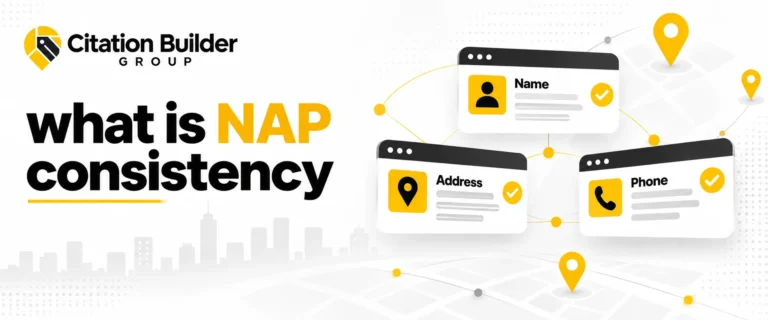
The most important information is commonly known as NAP, which stands for Name, Address, and Phone number. Search engines and potential customers should find the same core NAP information wherever the company appears online.
Businesses can build citations on general directories, local directories, industry-specific platforms, review websites, chamber of commerce websites, mapping services, and social networks. The best sources depend on the business category, physical location, target audience, and country.
Local Citation Definition: A Simple Explanation
A practical local citation definition is an online mention of a business that contains enough information to identify the company and associate it with a geographic market.
For example, imagine a plumbing company located in Toronto. A directory profile containing the company’s name, Toronto address, Canadian phone number, website, and plumbing category would be a local citation. An article published by a local news website that mentions the company’s name and location could also function as a citation, even if the article does not provide a complete business profile.
The value of a citation is influenced by several factors:
- Accuracy of the business information
- Consistency with other listings
- Relevance of the directory to the business
- Geographic relevance of the platform
- Quality and credibility of the website
- Completeness of the business profile
- Ability of customers to discover the listing
- Presence of duplicate or incorrect profiles
Therefore, citation building should not be approached as a simple numbers game. Creating hundreds of incomplete listings on irrelevant websites is unlikely to provide the same value as building accurate, detailed profiles across reputable directories that serve the correct location and industry.
Structured and Unstructured Local Citations
Understanding the main citation types makes it easier to answer what are local citations and identify where they can appear.
Structured Citations
Structured citations are organized business listings with designated fields for information such as the company name, address, phone number, website, category, and business hours.
They commonly appear on:
- Business directories
- Mapping platforms
- Review websites
- Social media profiles
- Local chambers of commerce
- Industry directories
- Professional association websites
Because every piece of business information is placed in a specific field, structured citations are easier for users and search engines to understand.
Unstructured Citations
Unstructured citations are business references included naturally within other content. They may appear in:
- Local news articles
- Blog posts
- Press releases
- Sponsorship pages
- Event websites
- Community portals
- Supplier or partner websites
- Industry publications
An unstructured citation may mention the business name, location, phone number, or website within a paragraph rather than displaying the details in a directory-style format.
Both types contribute to a business’s broader collection of online business mentions. Structured listings provide standardized information, while unstructured citations can strengthen geographic relevance, brand recognition, and topical authority.
Why Business Citations for SEO Matter
Building business citations for SEO gives a company more opportunities to appear wherever local customers are searching. A potential customer might find a business through a map, directory, review website, local portal, or industry platform before visiting its official website.
Accurate citations can support local marketing in several ways.
Improving Business Discoverability
Every relevant listing creates another potential path through which customers can discover a company. Someone may search a general business directory, browse a specialist industry platform, or use a local website to find nearby services.
When the business is listed in the right category and location, it becomes easier for those customers to find its contact information and visit its website.
Reinforcing Business Information
Consistent listings reinforce the relationship between a business name, its contact details, services, and location. If dozens of reputable sources display matching information, search engines can interpret the business entity with greater confidence.
In contrast, conflicting addresses, old phone numbers, duplicated profiles, and inconsistent business names can create uncertainty for customers and search platforms.
Building Customer Trust
Customers expect business information to be reliable. If a company displays one phone number on its website and another number on an external directory, a potential customer may hesitate to make contact.
Consistency across online business mentions helps create a professional and trustworthy brand experience. Customers can confirm that they have found the correct company and can contact it without worrying about outdated details.
Supporting Local Referral Traffic
Some citation sources receive their own organic traffic and have established audiences. An optimized listing on a relevant directory can send visitors directly to the company’s website, phone number, booking page, or physical location.
Citation value should therefore be measured by more than whether a listing provides a backlink. A citation can also generate calls, directions, website visits, enquiries, and brand exposure.
How Citation Consistency Affects Local SEO
When people ask what are local citations, they often focus on creating new listings. However, reviewing existing citations is equally important.
A business may already have dozens of profiles created by previous employees, marketing agencies, automated platforms, customers, or data providers. Some of those listings may contain outdated or conflicting information.
Common inconsistencies include:
- Old business addresses
- Incorrect phone numbers
- Different versions of the company name
- Broken or outdated website URLs
- Wrong business categories
- Duplicate directory profiles
- Inaccurate opening hours
- Missing suite or unit numbers
- Incorrect map locations
- Listings for closed offices
Minor formatting differences are not always a serious problem. Writing “Street” on one platform and “St.” on another does not automatically make a citation useless. The priority is ensuring that the essential information represents the same real business.
Businesses should pay particular attention after moving to a new address, changing their phone number, rebranding, opening additional branches, closing a location, or changing their website domain.
What Makes a High-Quality Local Citation?
Not every directory is suitable for every business. An effective citation strategy focuses on relevance, accuracy, quality, and geographic suitability.
A high-quality citation usually has the following characteristics:
It Appears on a Trusted Platform
Established directories and recognized local platforms are generally more valuable than websites created solely to publish large numbers of low-quality listings.
It Matches the Target Country
Citation sources should be selected according to the country in which the business operates. A German company needs German and internationally relevant directories, while a company in New Zealand needs platforms commonly used by customers in that market.
It Is Relevant to the Industry
Industry-specific citations can help connect a company to its main services. A legal directory is more relevant to a law firm, while a construction directory may be more suitable for a roofing contractor or building company.
It Contains Complete Information
A listing with a detailed description, correct category, opening hours, website, contact details, and images is more useful to customers than an almost empty profile.
It Does Not Duplicate an Existing Listing
Before creating a new citation, the directory should be checked for existing profiles. If a listing already exists, claiming and correcting it may be better than creating another version.
This quality-focused approach is central to effective business citations for SEO. The objective is to build a clean and reliable business footprint, not merely to generate a large spreadsheet of URLs.
How to Build Local Citations Step by Step
This section of our local SEO citation guide covers the main steps involved in a professional citation campaign.
1. Standardize the Business Information
Create a master business information document containing the approved company name, address, phone number, website, opening hours, primary category, secondary categories, email address, description, and social profiles.
This document should become the reference point for every submission.
2. Audit Existing Citations
Search for the business name, address, phone number, and previous contact details. Identify accurate listings, incomplete profiles, duplicates, and citations containing outdated information.
An audit reduces the risk of creating unnecessary duplicate listings.
3. Select Relevant Directories
Choose citation sources based on the business country, city, category, and customer audience. Include a balanced mix of established general directories, local platforms, niche websites, and trusted business networks.
4. Claim Existing Profiles
If the business already appears on a directory, follow the platform’s process to verify ownership. Once claimed, the listing can be updated and expanded with complete information.
5. Create New Citations Manually
Manual submission allows each listing to be reviewed before it is published. Categories can be selected carefully, descriptions can be adapted, and incorrect autofilled details can be avoided.
Businesses that need support with this process can explore Citation Building Group’s professional citation building services. The service helps companies create accurate listings while reducing the time required to research directories, check existing profiles, and complete submissions.
6. Add Useful Listing Content
Where the directory allows it, add opening hours, services, business descriptions, images, logos, service areas, payment options, and links to relevant website pages.
The information should remain accurate rather than being expanded with exaggerated claims simply to fill every available field.
7. Track Every Submission
Maintain a report containing the directory name, profile URL, submission date, status, login details, and any required follow-up action. Some listings may remain pending until the business completes email, phone, or postal verification.
8. Monitor and Update Citations
Citations should be reviewed whenever important business information changes. Periodic checks can also identify duplicates, user-suggested edits, or listings that have become inactive.
Local Citation Services Across Multiple Countries
The meaning of what are local citations remains consistent internationally, but the right sources and submission requirements vary by country. Businesses should not use one identical directory list for every market.
Citation Building Group supports businesses that need accurate citation building across multiple regions. Country-focused directory selection helps each business establish listings on platforms that are relevant to its actual market.
United States
Businesses in the United States can benefit from a combination of major national directories, state-level platforms, city directories, local chambers of commerce, and industry-specific websites. The citation strategy should reflect the company’s state, city, service area, and business category.
United Kingdom
UK businesses need listings that use the correct local address format, postcode, telephone format, and regional category. Relevant UK directories and city-based platforms can help companies reach customers searching within their local areas.
Canada
Canadian citation campaigns should consider province, city, postal code, language, and industry. Businesses serving more than one location should maintain a separate, accurate citation profile for each genuine branch.
Australia
Australian companies can strengthen their digital presence through national directories, state and territory platforms, local business networks, and industry portals. Consistent address and phone formatting remains essential.
South Africa
For businesses in South Africa, citations should focus on directories and local platforms that are accessible and relevant to South African customers. Listings should clearly identify the city, province, services, and correct local contact details.
Netherlands
Businesses in the Netherlands need accurate listings across appropriate Dutch, European, and industry-specific sources. Descriptions and categories should be suitable for the language and search behavior of the intended audience.
Germany
German citation building requires careful attention to local address formatting, company details, categories, and trusted German business platforms. Accurate information is particularly important when the company has several offices or service locations.
Singapore
Singapore businesses can use local directories, review platforms, professional portals, and niche industry listings to improve their discoverability. Each citation should reflect the company’s registered information and actual operating location.
New Zealand
Businesses in New Zealand should prioritize nationally recognized platforms, regional directories, chambers of commerce, and industry-specific sources. Listings should use consistent local phone, address, and service-area details.
A geographically targeted approach makes online business mentions more meaningful. It also prevents companies from wasting resources on directories that have little relevance to their location or customers.
Common Local Citation Mistakes to Avoid
Knowing what are local citations is only the beginning. Businesses also need to avoid mistakes that can weaken the quality of their citation profiles.
Using Different Business Names
Adding keywords or city names to a business name on some directories can create unnecessary inconsistency. Use the real trading name unless a platform has a legitimate reason to display a different legal form.
Choosing Irrelevant Categories
The primary category should describe the company’s main service accurately. Selecting unrelated categories to appear in more searches may confuse customers and reduce listing relevance.
Creating Duplicate Listings
Submitting a new profile without checking for an existing one can lead to multiple listings for the same business. Duplicates may split reviews, display conflicting details, and create a poor customer experience.
Building Citations on Low-Quality Websites
A high number of listings does not guarantee a strong campaign. Prioritize trustworthy, active, and relevant sources instead of submitting the business to every available website.
Ignoring Verification Requests
Some directories require email, phone, document, or postal verification. A listing may remain unpublished or incomplete if the verification process is not finished.
Forgetting to Update Old Citations
A citation strategy requires maintenance when core business information changes. Old addresses and disconnected phone numbers can cause customers to contact the wrong location or abandon their enquiry.
Are Citations the Same as Backlinks?
Citations and backlinks are related, but they are not identical.
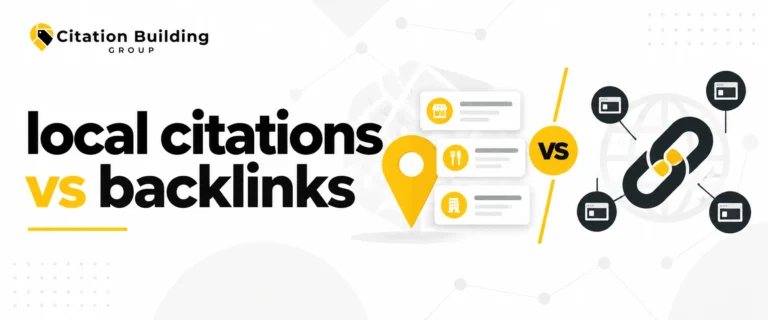
A backlink is a clickable link from another website to your website. A citation is a reference to the business and may or may not include a clickable link.
For example:
- A directory profile containing the business name, address, and phone number without a website link is still a citation.
- A blog article linking to a website without mentioning the business’s location may be a backlink but not a complete local citation.
- A directory listing containing NAP information and a clickable website link can function as both a citation and a backlink.
A complete local SEO strategy should not force businesses to choose between the two. Relevant business citations for SEO, quality backlinks, optimized location pages, useful website content, customer reviews, and a well-maintained business profile can work together.
How Long Does Citation Building Take to Show Results?
There is no universal timeline because citation performance depends on the business, market, competition, existing errors, website strength, and the time directories need to approve or index listings.
Citation building should be viewed as part of a broader local visibility strategy rather than a shortcut to instant rankings. The first goal is to create accurate business information and remove confusion across external platforms.
Over time, citations may contribute to:
- Greater business discoverability
- More consistent contact information
- Additional referral traffic
- Increased brand exposure
- Stronger geographic relevance
- More opportunities for calls and enquiries
- A cleaner local search presence
The best way to evaluate a campaign is to monitor listing approvals, referral visits, calls, direction requests, local rankings, website conversions, and the accuracy of the business’s digital footprint.
Frequently Asked Questions About Local Citations
What are local citations for a service-area business?
For a service-area business, citations are online listings or mentions that identify the company and connect it with the areas it genuinely serves. The business should follow each directory’s rules regarding hidden addresses, service regions, and physical locations.
Does every local citation need a backlink?
No. A citation can still identify and validate a business without containing a clickable website link. However, adding the correct website URL is beneficial when the platform provides an appropriate field for it.
How many local citations does a business need?
There is no fixed number suitable for every company. The ideal quantity depends on the country, industry, competition, existing citation profile, and availability of quality directories. Relevance and accuracy are more important than reaching an arbitrary total.
Can online business mentions include social media profiles?
Yes. Social media profiles that display accurate company information can be part of the wider collection of online business mentions. They should use consistent branding, contact information, and website details.
Should every business location have separate citations?
Yes, provided each location is genuine and meets the rules of the relevant directory. Every branch should have its own accurate address, local contact information, and landing page where appropriate. Businesses should not create fictional locations to target additional cities.
What information should be prepared before citation building?
Prepare the official business name, address, phone number, website, email, categories, opening hours, service areas, short and long descriptions, logo, images, social links, and any information required for verification.
Should citations be updated after a business moves?
Yes. Existing listings should be corrected as soon as possible after a move. Otherwise, customers may visit the old address, and directories may continue displaying conflicting location information.
Final Thoughts: Building a Reliable Local Citation Profile
So, what are local citations? They are accurate, location-based references that help customers and digital platforms identify a business across the web. They may appear as structured directory profiles or natural business references within local and industry content.
A successful citation campaign depends on consistent NAP information, relevant directory selection, complete profiles, duplicate prevention, proper verification, and ongoing updates. It should also be adapted to the country in which the business operates rather than relying on the same generic directory list for every market.
Whether your company serves customers in the United States, United Kingdom, Canada, Australia, South Africa, Netherlands, Germany, Singapore, or New Zealand, country-relevant citations can build a clearer and more trustworthy online presence.
If you want to save time and avoid inaccurate or duplicated listings, professional local citation building services can help create and manage citations across appropriate directories for your business and target country.