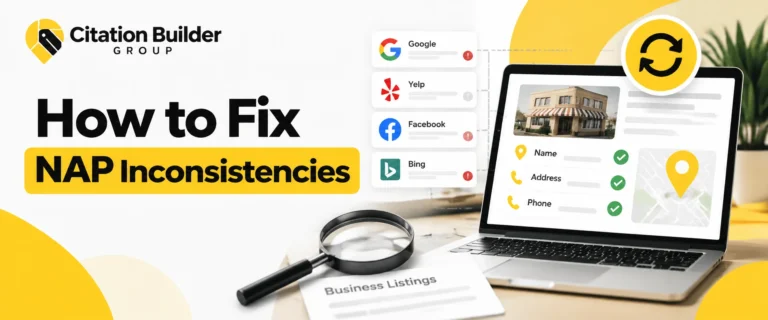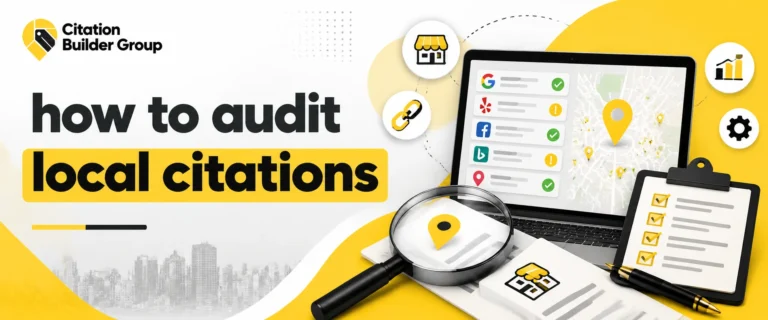

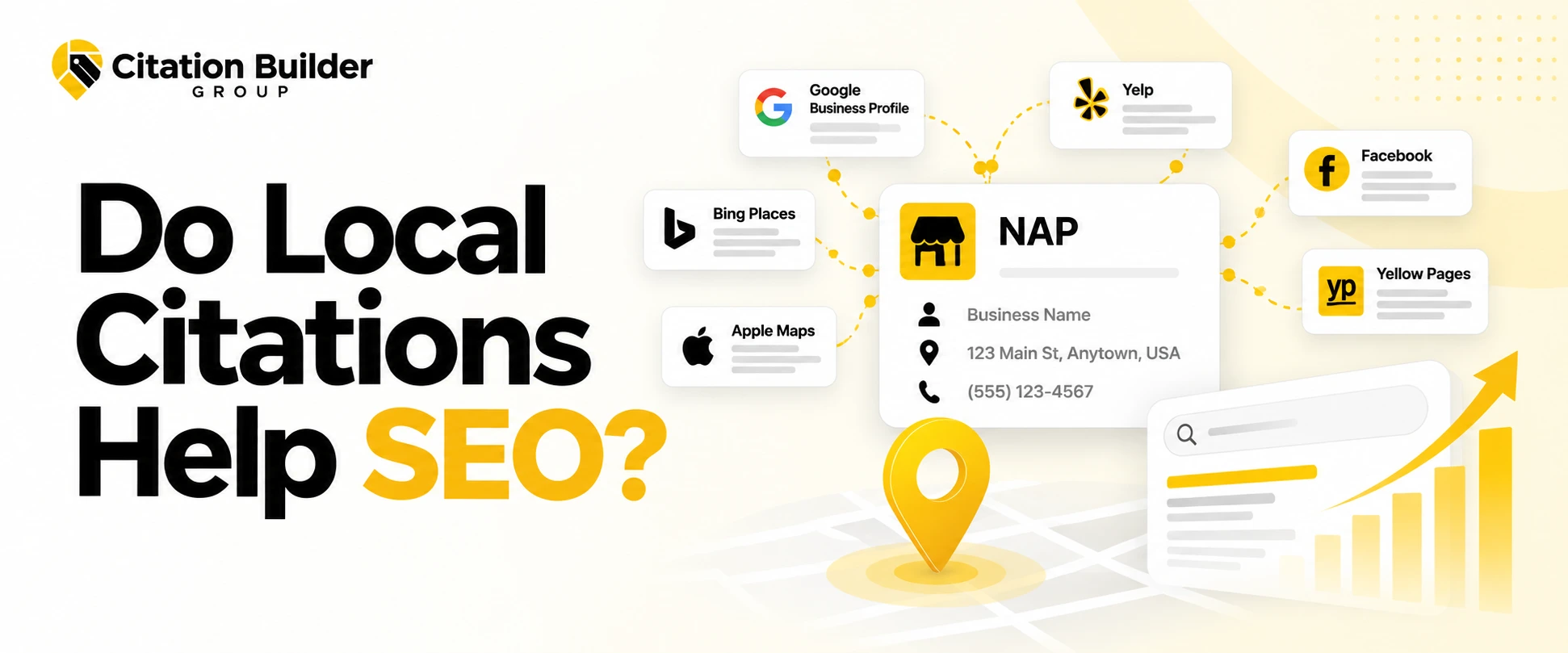
If your business depends on customers from a particular city, state, or service area, you may be wondering: do local citations help SEO, or are directory listings simply an outdated marketing tactic? The short answer is yes—accurate, relevant, and consistent local citations can support your local search visibility, reinforce your business information, and create more opportunities for customers to discover your company.
However, citations do not improve rankings simply because your business appears on hundreds of random websites. Their value depends on the accuracy of your business information, the authority and relevance of the directories, the consistency of your listings, and how well citations support the rest of your local SEO strategy.
In this guide, we explain how local citations work, their role in organic local search and Google Maps, which types of listings offer the most value, and how businesses can avoid common citation mistakes.
What Are Local Citations?
A local citation is an online mention of a business and its identifying information. A complete citation will normally include the business name, address, and phone number, commonly referred to as NAP information. It may also include:
- Website URL
- Business category
- Opening hours
- Services
- Business description
- Email address
- Images and videos
- Social media profiles
- Map location
- Customer reviews
Citations can appear on general business directories, local websites, industry-specific platforms, maps, apps, social networks, chambers of commerce, and other trusted online sources.
Some citations are structured, meaning the business information is organized into clearly defined fields. Others are unstructured mentions found naturally in articles, press releases, news stories, sponsorship pages, or local blogs.
If you want a more detailed explanation of citation types and components, read our guide to what local citations are.
Do Local Citations Help SEO Rankings?
So, do local citations help SEO rankings directly? Citations can contribute to local SEO by helping search engines verify key facts about a business. When the same name, address, phone number, website, and category appear across multiple relevant sources, Google receives additional confirmation that the business exists and operates where it claims to operate.
This verification is particularly important for businesses targeting geographically specific searches, such as:
- Dentist in Manchester
- Plumber in Toronto
- Roofing company in Sydney
- Attorney near me
- Restaurant in Berlin
- Local SEO agency in New York
Citations should not be treated as a replacement for a properly optimized website, Google Business Profile, customer reviews, locally relevant content, or quality backlinks. They work as part of a broader local search strategy.
The strongest citation benefits for SEO usually come from improving business-data consistency, increasing local visibility, supporting entity recognition, and helping potential customers find accurate contact information.
How Search Engines Use Local Citation Information
Search engines collect and compare information from numerous online sources. When business details match across a website, Google Business Profile, business directories, social profiles, and industry platforms, those details are easier to verify.
For example, imagine that a company is listed under the following variations:
- Smith Plumbing Ltd.
- Smith’s Plumbing Services
- Smith Plumbing and Heating
- Smith Plumbing LLC
If the phone numbers, addresses, or website URLs also differ, search engines may have difficulty determining whether these listings represent one business or several separate entities.
Consistent citations reduce this uncertainty. They create supporting references that connect a business name with a specific location, website, phone number, category, and service area.
These references can become part of the wider collection of local ranking citation signals associated with the business. Although no individual citation guarantees a higher position, consistent information across trusted sources creates a clearer and more credible digital footprint.
The Main Citation Benefits for SEO
The exact impact varies by market, location, industry, and competition, but there are several important ways citations can support a local business.
1. Reinforcing Business Information
Accurate citations confirm essential details about a company. Search engines can compare these details with the information found on the business website and Google Business Profile.
This reinforcement is one of the primary citation benefits for SEO, especially for new businesses, companies that have recently changed locations, and businesses with limited online visibility.
2. Supporting Local Search Relevance
Listings on location-specific or industry-specific directories provide contextual information about what a business does and where it operates.
A plumber listed on a reputable home-services directory in Canada, for example, sends clearer location and category information than a listing on an unrelated international directory.
3. Creating Additional Discovery Channels
Customers do not rely exclusively on Google Search. They may use maps, navigation apps, review sites, industry platforms, or local business directories.
Every accurate listing offers another opportunity for a potential customer to discover the business, visit its website, request directions, or make a phone call.
4. Building Customer Confidence
Repeatedly finding the same business information across credible websites can increase customer confidence. In contrast, conflicting phone numbers, outdated addresses, or broken website links can cause customers to question whether a company is still operating.
5. Increasing Referral Traffic
Some directories rank prominently for commercial and local searches. A complete listing on one of these platforms can generate qualified referral visits, even when the citation’s direct ranking impact is limited.
6. Supporting Brand and Entity Recognition
A consistent relationship between a business name, location, services, and website helps create a recognizable online entity. This broader consistency supports search engines in understanding the business and connecting its various online profiles.
Local Ranking Citation Signals That Matter Most
Not every listing carries equal weight. The most useful local ranking citation signals are generally associated with citation accuracy, directory quality, geographical relevance, industry relevance, and listing completeness.
NAP Consistency
The business name, address, and phone number should remain consistent wherever possible. Minor formatting differences, such as “Street” versus “St.,” are rarely a major problem. More significant differences—such as an old phone number or previous address—should be corrected.
Directory Authority and Trust
A listing on a recognized business platform, map provider, government register, chamber of commerce, or established industry directory will usually be more valuable than a listing on a low-quality website created solely to host links.
Geographic Relevance
Country, regional, state, and city directories can reinforce the location of a business. A company operating in France, for example, should not depend entirely on directories designed for businesses in the United States.
Industry Relevance
Specialist directories can connect a business to a specific industry. Legal directories, medical directories, contractor platforms, hospitality listings, and real estate portals may provide stronger context than general directories.
Listing Completeness
Complete profiles can offer more customer value than listings containing only a name and phone number. Categories, descriptions, hours, services, images, and website links help users understand the business before contacting it.
Duplicate Control
Multiple conflicting listings on the same platform may divide reviews, confuse customers, and make business information harder to manage. Finding and correcting duplicate listings is therefore an important part of citation management.
What Is the Real Business Directory SEO Value?
The business directory SEO value of a listing should not be judged by domain authority alone. A useful directory should be relevant, trustworthy, accessible to search engines, and capable of helping real customers find or verify a business.
A good business directory listing may provide value through:
- An accurate business mention
- A link to the official website
- Industry or category relevance
- Location confirmation
- Referral traffic
- Customer reviews
- Calls or direction requests
- Additional brand visibility
A directory with a high authority score is not automatically suitable for every business. If the platform is irrelevant, full of spam, or intended for a different country, the practical business directory SEO value may be low.
Directory selection should therefore focus on quality and relevance instead of submission volume alone. Businesses should prioritize major data sources, established general directories, local platforms, and directories connected to their industry.
Do Citations for Google Maps Improve Visibility?
Citations for Google Maps can support a business’s wider local search foundation by reinforcing its name, location, phone number, categories, and website across external sources.
Google Maps rankings depend on multiple factors, including relevance, distance, and prominence. Citations are not the only influence, and building more listings cannot overcome an irrelevant category, weak Google Business Profile, distant location, poor website, or lack of reviews.
Nevertheless, consistent citations for Google Maps can help by:
- Supporting the accuracy of business information
- Strengthening associations between the business and its location
- Expanding the company’s online footprint
- Providing additional references to its services and categories
- Reducing confusion caused by old or conflicting information
The most effective strategy combines accurate citations with a complete Google Business Profile, correct categories, genuine customer reviews, location-relevant website pages, strong on-page SEO, and locally relevant backlinks.
Structured and Unstructured Citations
Structured citations appear in an organized business-profile format. Examples include listings on directories, review platforms, map providers, and social media profiles. These citations usually have dedicated fields for the business name, address, phone number, URL, and category.
Unstructured citations are contextual business mentions that appear within ordinary content. They may be found in:
- Local news articles
- Blog posts
- Event pages
- Sponsorship announcements
- Supplier pages
- Professional association websites
- Community resource pages
- Press coverage
Both types can be valuable. Structured citations make essential information easy to identify and compare, while unstructured mentions can create relevance, authority, brand exposure, and referral opportunities.
When asking do local citations help SEO, it is important to consider both categories instead of focusing only on traditional business directories.
Quality vs. Quantity: How Many Citations Do You Need?
There is no universal number of citations that every business must build. A local business in a small market may need fewer listings than a company competing in a crowded city or highly competitive industry.
Before choosing a target number, consider:
- How many accurate listings already exist
- Whether duplicate or outdated profiles are present
- The strength of competing businesses
- The availability of country-specific directories
- The number of relevant industry directories
- Whether the business has one location or multiple locations
- The quality of the existing Google Business Profile and website
Building 200 low-quality citations is not necessarily better than creating 50 accurate listings on carefully selected sources. A smaller collection of relevant and consistent listings may deliver better long-term value and be easier to manage.
The goal is to create a dependable citation profile—not to reach an arbitrary total.
Common Citation Mistakes That Can Limit Results
Understanding do local citations help SEO also requires understanding why citation campaigns sometimes fail. The following mistakes can reduce their effectiveness.
Submitting Incorrect Information
If incorrect information is submitted repeatedly, the campaign distributes errors instead of strengthening the business’s local presence. Every order should begin with a confirmed master record containing the correct business information.
Ignoring Existing Listings
Creating a new profile without checking for an existing one may produce duplicates. Existing listings should be found, claimed where possible, and updated before another profile is created.
Using the Same Directories for Every Country
Citation sources should match the target market. Platforms popular in the United Kingdom may have little customer reach in Germany, Singapore, or South Africa.
Choosing Irrelevant Categories
Categories explain what a company does. Selecting a broad or inaccurate category can weaken the relevance of the listing and attract the wrong audience.
Creating Thin Profiles
Incomplete listings miss opportunities to provide customers and search engines with useful context. When a platform allows it, businesses should add descriptions, services, hours, images, and links.
Expecting Instant Rankings
Citation discovery, indexing, and business-data reconciliation take time. Local rankings are also affected by proximity, competition, reviews, website quality, links, content, and Google Business Profile optimization.
Failing to Update Citations
A citation strategy does not end after submission. Business details should be reviewed following a move, rebrand, phone-number change, website migration, merger, or change in opening hours.
How to Build an Effective Citation Strategy
A reliable citation campaign should follow a clear process.
Step 1: Establish a Master Business Record
Confirm the official business name, address, primary phone number, website URL, categories, description, hours, and service areas.
Step 2: Audit Existing Citations
Search for existing profiles using the business name, phone number, address, and previous company details. Record accurate listings, incorrect listings, duplicates, and missing opportunities.
Step 3: Correct Important Errors
Prioritize major platforms and any listings that rank for the business name. Correct old addresses, incorrect phone numbers, broken URLs, and misleading categories.
Step 4: Select Relevant Directories
Choose established general directories, country-specific sources, regional platforms, and industry-relevant websites. This selection process is essential for maximizing business directory SEO value.
Step 5: Create Complete Listings Manually
Manual review helps prevent field-mapping errors, inappropriate categories, duplicated descriptions, and missing information. Complete each profile as fully as the directory permits.
Step 6: Track Listings and Credentials
Maintain a report containing submission URLs, live listing URLs, account information, status, and any listings that require verification.
Step 7: Review Results as Part of Local SEO
Monitor Google Business Profile performance, local rankings, referral traffic, calls, direction requests, and website conversions. Citation performance should be evaluated alongside the rest of the local SEO campaign.
Citation Builder Group provides professional citation building and local SEO services for businesses and agencies that need accurate, manually created listings and organized reporting.
Local Citation Services Across Multiple Countries
Citation opportunities differ substantially between countries. Local platforms, address conventions, languages, business categories, and verification requirements must all be considered.
Citation Builder Group supports citation campaigns for businesses operating in:
- United States
- United Kingdom
- Canada
- Australia
- South Africa
- Netherlands
- Germany
- Singapore
- New Zealand
- France
- Spain
- Italy
- Turkey
- Greece
- Sweden
- Switzerland
- Austria
- Belgium
- Portugal
For companies serving multiple countries, one generic directory list is rarely sufficient. Each location should receive citations from platforms relevant to its market.
For example, a company operating in the United States may need national directories, state-specific platforms, city directories, and niche sources. A business in the Netherlands, Germany, France, or Italy may benefit more from directories and local platforms recognized within its own country.
Multi-location businesses must also keep the information for each branch separate. Every location should have its own accurate address, local phone number where available, landing page, categories, and listing report. This reduces the risk of combining information from different branches.
Are Citation Links the Same as Backlinks?
Citation links and traditional backlinks overlap, but they are not exactly the same.
A backlink is any clickable link from one website to another. A citation is a business mention that may include a link, but it can still be considered a citation when the website URL is absent or not clickable.
Traditional link-building campaigns often focus on editorial authority, topical relevance, and the ranking strength passed through links. Citation campaigns place greater emphasis on business-data accuracy, location confirmation, online visibility, and NAP consistency.
The two strategies work well together. Citations support the business’s local information ecosystem, while relevant backlinks can strengthen the authority of the website and its location or service pages.
How Long Does It Take for Citations to Affect SEO?
There is no fixed timeline. Some listings may become live quickly, while others require email, phone, postcard, or document verification. Search engines must then discover or revisit those pages before the information can be processed.
The impact also depends on the condition of the business’s existing citation profile. Correcting major inconsistencies may be more valuable than adding new listings to an already accurate profile.
Businesses should generally measure citation work over weeks and months rather than expecting immediate movement. They should also remember that local SEO performance can change because of competitor activity, reviews, website improvements, Google Business Profile updates, algorithm changes, or shifts in search demand.
How Can You Measure Citation Performance?
Citation success should be evaluated using a combination of accuracy, visibility, and conversion metrics.
Useful measurements include:
- Number of accurate live listings
- Number of incorrect listings corrected
- Number of duplicate profiles removed or merged
- Referral visits from directories
- Calls or leads generated from directory profiles
- Google Business Profile views and actions
- Local keyword rankings
- Google Maps visibility
- Branded search growth
- Website conversions from local visitors
Rankings alone do not tell the entire story. A directory profile that generates qualified phone calls or website visits has real business value even if its precise ranking contribution cannot be isolated.
Frequently Asked Questions
Do local citations help SEO for every business?
Local citations are most relevant to businesses serving customers within specific locations. This includes shops, clinics, restaurants, contractors, agencies, professional services, and service-area businesses. Fully online businesses without a meaningful local presence may receive less value from a traditional citation campaign.
Do local citations help SEO if they do not include a backlink?
Yes. A citation can still confirm the business name, address, phone number, category, or location even without a clickable link. Listings with website links can provide additional referral and link value, but unlinked business mentions may still be useful.
Are citations a Google Maps ranking factor?
Citations can contribute to the wider prominence and verification of a local business, but Google Maps rankings depend on many signals. Accurate listings should be combined with an optimized Google Business Profile, reviews, locally relevant pages, strong website content, and reputable backlinks.
What are the most important citation benefits for SEO?
The main benefits include stronger business-data consistency, greater online visibility, better location confirmation, more customer discovery opportunities, referral traffic, and increased confidence in the accuracy of business information.
Can incorrect citations harm local SEO?
Incorrect citations can confuse customers and weaken the consistency of the company’s digital footprint. Important outdated or duplicate listings should be corrected, especially when they show an old address, phone number, website, or business name.
Should I submit my business to every available directory?
No. Prioritize authoritative, relevant, local, and industry-specific sources. Submitting a company to unrelated or low-quality websites can waste time and make future citation management more difficult.
How often should business citations be audited?
Businesses should review their major listings at least periodically and immediately after any significant change to the company name, address, phone number, website, services, opening hours, or ownership.
Are citations useful for multi-location businesses?
Yes, but every branch must have its own accurate information. Mixing the details of different locations can produce duplicate listings, customer confusion, and incorrect map information.
Final Answer: Do Local Citations Help SEO?
So, do local citations help SEO? Yes—when they are accurate, consistent, relevant, and created on trustworthy platforms. Citations help search engines and customers verify a business, understand its location, and connect it with the products or services it provides.
The best results do not come from submitting identical information to as many websites as possible. They come from auditing existing listings, correcting errors, choosing directories carefully, creating complete profiles, and maintaining accurate information over time.
Citations should also support—not replace—your Google Business Profile, website optimization, customer-review strategy, local content, and link building. When these elements work together, businesses can build a stronger foundation for organic local rankings and Google Maps visibility.
If you want manually created, optimized, and carefully documented business listings, explore the professional citation solutions available from Citation Builder Group.