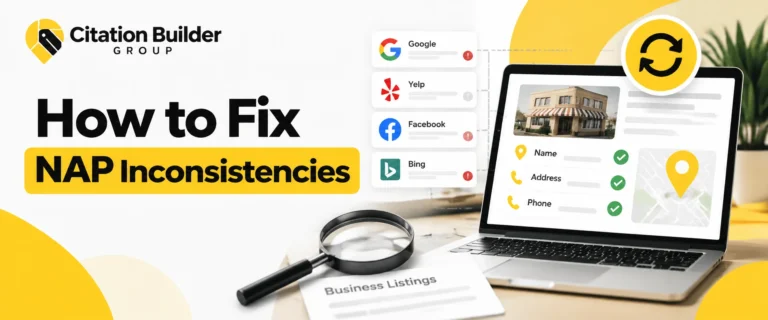


If you want customers in a specific city or service area to find your company, citations are an essential part of your local SEO foundation. Yet the term can feel abstract until you see practical local citation examples and understand what makes each one useful. A citation is any online mention of a business that helps identify it, usually through its name, address, and phone number. It may appear in a formal directory listing, a social profile, a local news story, an industry association page, or even a community blog.
The value of a citation depends on more than simply being mentioned. Accuracy, consistency, relevance, and source quality all matter. A correct listing on a trusted platform can help search engines verify your business and help potential customers contact you. An outdated or duplicated listing, however, can create confusion. In this guide, we will examine local citation examples in multiple formats, show how NAP data should appear, explain the difference between structured and unstructured citations, and outline how to build a stronger citation profile.
For professional support with manual submissions and consistent listings, visit Citation Builder Group.
What Is a Local Citation?
A local citation is an online reference to a business and its identifying information. The most important details are commonly called NAP: Name, Address, and Phone number. Many citations also contain a website URL, opening hours, business category, service description, photographs, and links to social profiles. These local citation examples can appear in different formats, but they should always make the business easy to identify.
Consider a fictional plumbing company:
If these details appear on a directory, map platform, trade association website, or local article, that mention may function as a citation. The best local citation examples make it easy for both search engines and people to recognize that every mention refers to the same real-world business.
Citations are not the same as backlinks. A backlink must include a clickable link to your site, while a citation can still be valuable without one. A high-quality mention that includes accurate NAP information can reinforce business identity even when the publisher does not add a link.
Why Local Citation Examples Matter for Search Visibility
Search engines compare information from many online sources to understand a company’s identity, category, and location. When the same details appear consistently across reputable platforms, they provide corroborating signals. When search engines encounter consistent local citation examples across reliable sources, they can connect those mentions to the same business entity. This can support the wider local SEO work behind visibility in location-based search results and map listings.
Citations also influence the customer experience. Imagine someone finds one phone number on a directory and a different number on a social profile. That inconsistency creates doubt and may cost the business a call. Accurate citations reduce friction by giving customers dependable information wherever they discover the company.
Reviewing local citation examples is particularly useful when a business has moved, changed its name, adopted a new phone number, opened additional locations, or inherited old listings. In those situations, citation building should include an audit for duplicates and inaccurate data, not just the creation of new profiles.
Structured Citation Examples
Structured citations place business information into predefined fields. A directory may ask for the company name, street address, city, postal code, phone number, URL, category, hours, and description. Because the information follows a standard layout, it is easy to scan and compare. These are often the clearest local citation examples because every detail appears in a predictable location.
Common structured citation examples include:
- A complete business profile on Bing Places
- A company page on Yelp or Foursquare
- A listing in a national Yellow Pages directory
- A profile in a local chamber of commerce directory
- A trade-specific listing for a lawyer, dentist, restaurant, contractor, or hotel
- A business page on an established social platform that displays NAP details
For example, a structured restaurant listing might show the restaurant name at the top, followed by its category, address, reservation number, website, opening hours, menu link, and photographs. The platform stores these items in separate fields rather than inside a free-form article.
Strong structured citation examples are complete, accurate, and placed on platforms that are relevant to the business’s country, city, or industry. Completeness matters because a customer may use the listing to call, request directions, check operating hours, or visit the website. Selecting the correct primary category is also important: a dental clinic should not be listed under a broad medical category if the platform offers a precise dental category.
Unstructured Citation Examples
Unstructured citations appear naturally within editorial or contextual content rather than in a fixed directory template. They can mention part or all of the business’s NAP information and may include a link. Such local citation examples add context by connecting the company with a place, event, recommendation, or subject.
Useful unstructured citation examples include:
- A local newspaper article announcing the opening of a new store
- A neighborhood blog recommending several nearby service providers
- A sponsor page for a local charity event
- A tourism guide mentioning a restaurant’s address and booking number
- An industry association article that quotes a company expert
- A university, community, or municipal page naming a participating business
Suppose a local publication writes: “Green Lane Cycles, located at 17 High Road in Auckland, now offers weekend repair appointments at 09 555 0142.” That sentence is an unstructured citation because the business information appears inside an article rather than in standardized profile fields.
The strongest unstructured citation examples come from genuine relationships, local relevance, expertise, or newsworthiness. They should not be manufactured through spammy comments or copied articles. Businesses can earn these mentions by supporting community initiatives, joining respected associations, providing expert commentary, publishing original research, or building partnerships with relevant local organizations.
Business Directory Examples by Citation Type
Directories remain one of the most recognizable sources of structured citations. Familiar business directory examples include Yelp, Bing Places, YellowPages, Foursquare, Nextdoor, Manta, Hotfrog, Brownbook, Opendi, and CitySquares. These platforms provide practical local citation examples that customers may encounter while comparing nearby companies. Availability and value vary by market, so the right mix depends on the business location and industry.
Directories generally fall into four categories:
- Major platforms: Widely recognized services that cover many industries and locations.
- Country or city directories: Platforms designed for a particular national or local audience.
- Industry directories: Sites dedicated to professions or sectors such as legal services, healthcare, hospitality, home services, or real estate.
- Membership directories: Chambers of commerce, professional bodies, and business associations that list verified members.
These business directory examples should be treated as a starting point, not a universal submission list. A platform that is useful for a retailer in the United States may be less relevant to an engineering consultancy in Germany or a restaurant in Singapore. Source selection should consider geographic relevance, industry fit, platform quality, and the business’s existing listings.
If you want a managed approach, explore the site’s citation building and local growth services, which include manual submissions, duplicate checks, optimized listing details, and reporting.
Local Citation Examples for Different Industries
The best citation profile reflects how customers search within a specific market. Here are several industry-based local citation examples:
Home services
A roofing company may have profiles on major directories, a local chamber website, construction associations, and trusted contractor platforms. Each listing should use the same phone number and address or approved service-area details.
Healthcare
A dental or medical practice may appear in general directories, healthcare-specific databases, insurer networks, hospital partner pages, and local professional associations. Practitioner information must be separated carefully from the practice’s main business details where appropriate.
Hospitality and restaurants
A hotel or restaurant may be cited on travel platforms, reservation services, tourism websites, local food guides, and event pages. Hours, reservation links, amenities, and address accuracy are especially important because customers often act immediately.
Professional services
Law firms, accountants, consultants, and real estate companies can use professional directories, licensing bodies, chamber listings, local sponsorship pages, and business publications. These sources can reinforce both location and expertise.
Retail
A local store may benefit from map services, shopping directories, mall or district websites, brand stockist pages, and community guides. Each branch needs its own profile when the company operates multiple stores.
How to Evaluate Citation Quality
Quantity alone does not define success. Ten accurate, relevant listings can be more useful than dozens of incomplete profiles on weak or unrelated sites. Use the following criteria when evaluating local citation examples or planning new submissions:
- Accuracy: Does the citation match the approved business name, address, and phone number?
- Relevance: Is the source connected to the company’s location, audience, or industry?
- Authority and trust: Is the platform established, maintained, and useful to real visitors?
- Completeness: Does the profile include categories, hours, website, description, and imagery where allowed?
- Uniqueness: Is there one correct listing rather than several competing duplicates?
- Accessibility: Can customers and search engines reach the listing without encountering broken pages?
- Maintenance: Is there a reliable way to update the profile if the business changes?
Avoid choosing directories based only on a third-party authority score. A respected local association or niche directory may be highly relevant even if it is smaller than a national platform. The goal is a credible and consistent business footprint.
How to Build Citations Correctly
Start by creating a master business information document. It should contain the approved NAP, website URL, business categories, opening hours, short and long descriptions, service areas, social links, logo, photographs, and contact email. This document becomes the reference for all future local citation examples and reduces the risk of inconsistent submissions. For multi-location organizations, create a separate record for every branch.
Next, audit existing listings. Search by business name, old names, current and previous phone numbers, and current and former addresses. Claim accurate profiles where possible, correct outdated information, and address duplicates before creating unnecessary new listings.
Then prioritize sources. Begin with prominent platforms, followed by credible country-specific, local, and industry websites. Submit each listing carefully and keep a record of the profile URL, login details, submission date, and status. Manual review helps prevent category errors, accidental duplicates, and missing information.
Finally, monitor citations whenever something changes. A relocation, rebrand, merger, or phone update should trigger a new audit. Citation consistency is an operational process, not merely an item to check once and forget.
If you need a deeper introduction before putting these steps into practice, read What Are Local Citations.
Countries Supported by Citation Builder Group
Directory selection must reflect the country in which a business operates. Citation Builder Group provides citation services for businesses in:
- United States
- United Kingdom
- Canada
- Australia
- South Africa
- Netherlands
- Germany
- Singapore
- New Zealand
- France
- Spain
- Italy
- Turkey
- Greece
- Sweden
- Switzerland
- Austria
- Belgium
- Portugal
The approach should be localized in every market. Local citation examples for the United Kingdom may include different national directories from those used in Canada or Australia. Listings in France, Germany, Italy, Spain, or the Netherlands may require local-language descriptions and market-specific categories. Address formatting, telephone conventions, and directory availability also vary between countries. Reviewing country-specific local citation examples helps businesses select sources that are genuinely relevant to customers in each market.
This is why a carefully selected country list is better than submitting every business to the same generic set of sites. A locally relevant citation profile supports clearer geographic signals and creates a more useful experience for customers in that market.
Common Citation-Building Mistakes
One of the most frequent mistakes is submitting before the business data has been verified. If the source information is wrong, the same error can spread across many websites. Other problems include creating duplicates, selecting unrelated categories, using inconsistent tracking numbers, stuffing descriptions with keywords, leaving profiles incomplete, and losing account access.
Businesses should also avoid assuming that every citation requires identical marketing copy. The core NAP must remain consistent, but descriptions can be adapted naturally to the platform and audience. A chamber profile may emphasize company history, while a trade directory profile may focus on specialist services.
Another mistake is focusing entirely on structured listings while ignoring genuine local mentions. A balanced strategy can combine strong directory profiles with editorial coverage, partnerships, sponsorships, and association membership. Looking at both structured citation examples and unstructured citation examples helps create a more natural online footprint.
Frequently Asked Questions About Local Citation Examples
How many local citations does a business need?
There is no universal number. The appropriate target depends on the country, industry, competition, and current citation profile. Prioritize accurate listings on platforms that matter instead of pursuing volume alone.
Does a citation need to include a website link?
No. A business mention can still count as a citation without a backlink. However, a relevant link may provide customers with a direct path to the website and can add separate SEO value.
Are social media profiles local citations?
They can be. A business profile that displays accurate identifying information, especially NAP details, can function as a citation. Keep those details aligned with directory and website information.
Should service-area businesses publish a home address?
Businesses should follow the rules of each platform and protect private residential information. Use the approved service-area or hidden-address settings where available rather than publishing an address that should remain private.
Are citations a replacement for reviews or backlinks?
No. Citations are one part of local SEO. A healthy strategy can also include an optimized website, a complete business profile, useful local content, legitimate reviews, relevant backlinks, and a strong customer experience.
Final Thoughts
The most valuable lesson from these local citation examples is simple: consistency and relevance matter more than indiscriminate volume. Establish one verified version of your business information, correct old or duplicate profiles, choose directories suited to your market, and look for credible local or industry mentions. That process creates a cleaner digital footprint for search engines and a more dependable experience for customers.
Whether you are comparing NAP citation examples, reviewing business directory examples, or planning a mix of structured and editorial mentions, treat every citation as a public representation of your brand. If you want specialists to research existing profiles, submit accurate listings manually, and provide a clear delivery report, learn more about Citation Builder Group’s citation services or visit the Citation Builder Group homepage.