
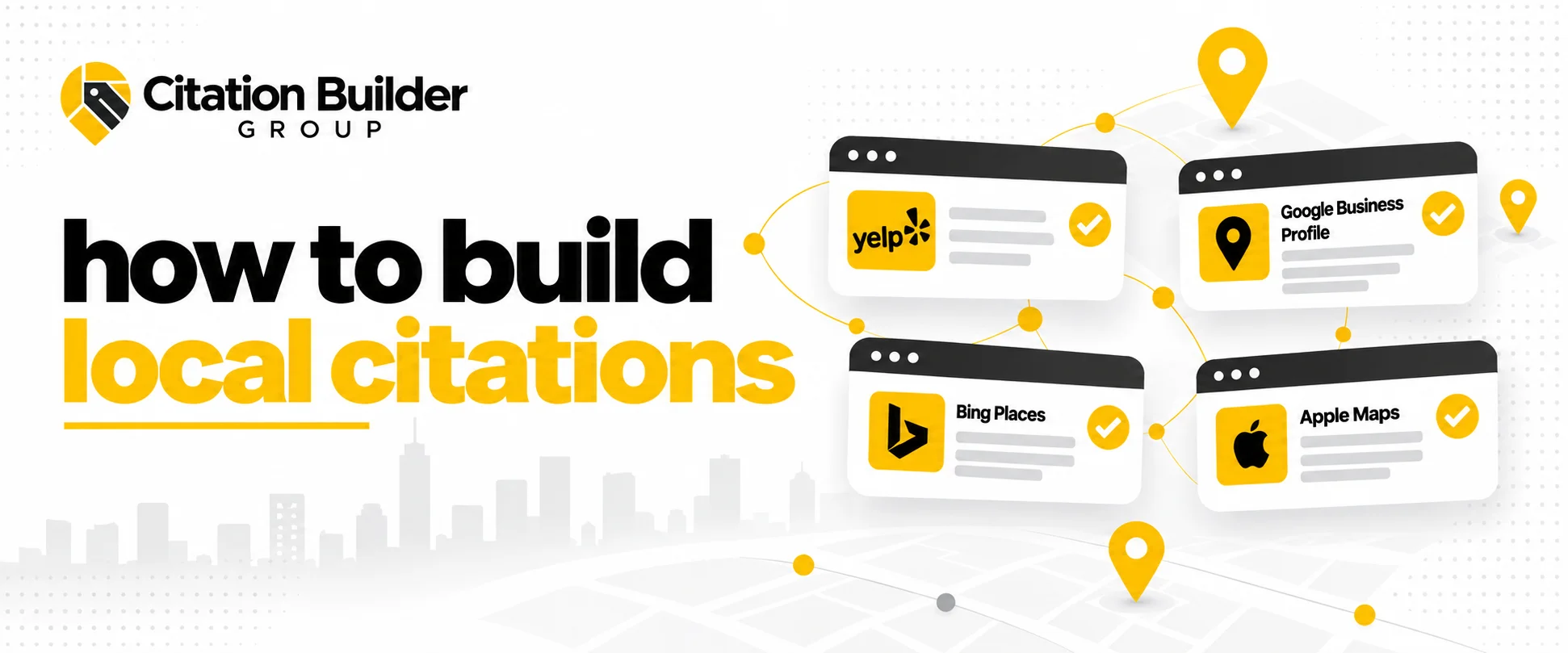
Understanding how to build local citations starts with knowing what search engines and potential customers need to confirm that a business is legitimate, active, and relevant to a particular area. A citation is any online mention of a business’s core information, usually its name, address, and phone number. Many citations also include a website URL, opening hours, services, photos, and a description. When these details are accurate across reliable platforms, a business creates a clearer and more trustworthy local presence.
Learning how to build local citations is therefore an essential part of local SEO. The process is more involved than copying the same details into dozens of websites. You need accurate source data, relevant directories, duplicate checks, platform-specific optimization, verification, and ongoing quality control. This guide explains every stage so you can build listings that support visibility without creating inconsistencies.
If you are new to the subject, begin with this explanation of what local citations are and how they help search engines connect a business with a location.
Why Local Citations Matter
Search engines collect business information from many sources. When established directories repeatedly show the same company name, address, phone number, and website, those matching references reinforce confidence in the business entity. This is why any plan for how to build local citations should prioritize accurate information on trusted platforms. Citations also give customers more ways to discover a company outside its own website, including through city directories, industry portals, maps, review platforms, and community sites.
Citations are not identical to conventional links. A listing can still be valuable even when the website link is nofollow or when the citation contains no clickable link at all. The primary purpose is to confirm identity and location, while backlinks primarily pass authority and create referral paths. For a closer comparison, read local citations vs backlinks.
It is also useful to understand the two main formats. Structured citations place business data into defined fields on a directory or profile. Unstructured citations mention a company naturally in an article, local news story, sponsorship page, or event listing. This guide focuses mainly on structured listings, but both types can strengthen a wider local strategy. See structured vs unstructured citations for more detail.
How to Build Local Citations Before You Start Submitting
The strongest campaigns begin with preparation. Before you create local business listings, establish one approved version of every detail that will appear online. This master record should include:
- Legal or customer-facing business name
- Complete street address, including suite or unit number
- Primary local phone number
- Website URL and preferred landing page
- Main and secondary business categories
- Opening hours and special-hours policy
- Short and long business descriptions
- Service areas where relevant
- Logo, cover image, and location photos
- Public email address and social profiles
Your business name should match real-world branding rather than contain extra keywords. Use a consistent address format, and decide whether abbreviations such as “Street” and “St.” will be standardized. Small formatting differences are not always serious, but conflicting names, old addresses, or disconnected phone numbers can confuse customers and make listings harder to manage.
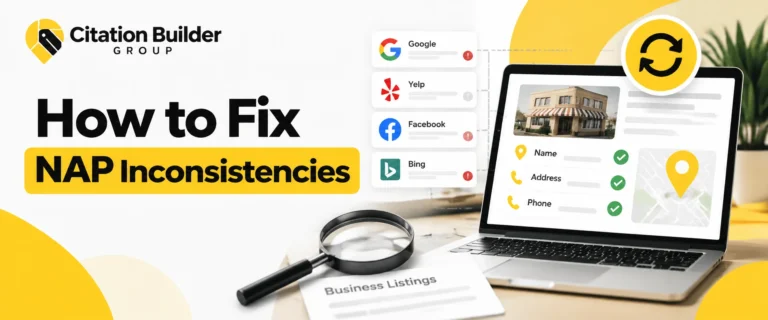
This standardization is commonly called NAP consistency. NAP stands for name, address, and phone number, although modern citation management also considers website URLs, hours, categories, and other entity details. The article what NAP consistency means explains why a dependable master record should come before submission.
Step 1: Audit Existing Business Listings
The first practical lesson in how to build local citations is to check what already exists before submitting anything new. Do not immediately submit business to directories without searching for the business name, current phone number, old phone numbers, current address, previous addresses, and common name variations. Look for accurate profiles, incomplete records, duplicates, and listings belonging to a different business with a similar name.
Create an audit sheet with the directory name, profile URL, current status, displayed NAP, login details, and required action. Mark each listing as accurate, needs updating, duplicate, pending verification, or missing. This prevents a new submission from competing with an old profile and gives you a clean plan for corrections.
When a listing already exists, claim or update it instead of creating another one whenever the platform allows. Duplicate profiles can divide reviews, expose outdated information, and make future maintenance more difficult. If you cannot access a listing, follow the directory’s ownership or support process and keep a record of every request.
Step 2: Choose the Right Citation Sources
Knowing how to build local citations also means knowing which sources deserve priority. A successful strategy is based on relevance and trust, not the largest possible number of submissions. Start with major platforms used in the target country, then add respected local, regional, and industry-specific directories. A plumber, dentist, solicitor, restaurant, and property agent will not benefit from exactly the same source list.
Evaluate each directory by asking whether it is indexed, actively maintained, relevant to the business, usable by real customers, and free from obvious spam. Give priority to platforms that rank for searches related to the company’s category and location. City chambers, professional associations, niche marketplaces, and established review sites may be more useful than a generic directory with thousands of thin pages.
Examples help you recognize useful profiles and citation formats before starting. Review these local citation examples to see how business data can appear across different sources.
Step 3: Follow a Manual Citation Building Process
A careful manual citation building process gives you control over every field. Automated submission may be faster, but forms vary widely, categories differ, and some directories require unique verification steps. Manual work makes it easier to detect an existing profile, select the closest category, adapt a description, and avoid preventable errors.
For each chosen platform, follow this sequence:
- Search the directory for the business name, address, and phone number.
- Claim an accurate existing listing or begin a new profile only if none exists.
- Enter the approved NAP exactly as recorded in the master document.
- Select the most specific primary category and suitable secondary categories.
- Add the canonical website URL using HTTPS where available.
- Complete hours, services, service areas, attributes, and accessibility details.
- Upload clear, properly named images that represent the real business.
- Review every field before submission.
- Complete email, phone, postcard, or document verification if required.
- Record the profile URL, credentials, status, and submission date.
The aim is not merely to create local business listings but to create complete profiles that customers can use. Empty or rushed listings miss opportunities to communicate services, establish relevance, and drive visits to the website.
Step 4: Optimize Each Listing Without Creating Inconsistency
An effective approach to how to build local citations combines consistent facts with platform-specific optimization. Consistency does not mean every sentence must be identical. Core facts should remain stable, but descriptions can be adjusted to match a platform’s character limits and audience. Keep the company name, address, phone number, and primary website consistent while writing natural descriptions that accurately explain services and locations.
Avoid inserting city names or service keywords into the business name unless they are genuinely part of the brand. Choose precise categories rather than selecting every available option. Add a unique tracking parameter to a website URL only when it will not interfere with canonical destination management, and document any tracked URLs in your audit sheet.
Photos should be current and relevant. Include the storefront, interior, team, products, completed work, or vehicles where appropriate. Confirm that opening hours match the website and update special hours before holidays. These details make listings useful to customers and reduce the chance that they will encounter conflicting information.
Step 5: Submit Business to Directories and Complete Verification
If you are learning how to build local citations, remember that submission and publication are not always the same step. When you submit business to directories, a listing may be published immediately, sent for moderation, or held until ownership is verified. Verification can involve an email link, phone code, text message, postcard, live video, or supporting business documents. Use an email address that will remain accessible, and never invent information simply to pass a form.
Pending profiles should be tracked and revisited. Check confirmation emails, spam folders, platform dashboards, and any stated review period. If a directory rejects a listing, read its eligibility rules before resubmitting. Repeatedly sending the same unsuitable data can create duplicates without solving the original issue.
Once a profile is live, open its public page and inspect it as a customer would. Test the phone number and website link, check the map pin, review the category, and confirm that images display correctly. Capture the live URL and final status in your report.
Step 6: Use a Local Listing Submission Guide for Quality Control
A repeatable local listing submission guide keeps different campaigns and team members aligned. The guide should define approved data formats, source-selection criteria, duplicate-handling rules, verification procedures, naming conventions for images, and reporting requirements.
Quality control is a necessary part of how to build local citations that remain useful over time. It should happen at three points: before submission, immediately after data entry, and after publication. Compare the public profile with the master record rather than relying on memory. A second-person review can catch transposed digits, incorrect suite numbers, wrong categories, broken URLs, or accidental keyword additions.
Your final report should include live URLs, pending listings, rejected submissions, duplicate issues, login or claim information, and notes about follow-up work. Citation Building Group’s citation building services can handle this workflow for businesses and agencies that prefer managed manual submissions and organized reporting.
How to Build Local Citations Across Different Countries
Directory value changes by market. A platform that is influential in one country may have little relevance in another, so how to build local citations internationally begins with country-specific research. Use the correct address conventions, telephone format, language, regional spelling, and local business categories for each location.
Citation Building Group provides citation services for businesses in the United States, United Kingdom, Canada, Australia, South Africa, Netherlands, Germany, Singapore, New Zealand, France, Spain, Italy, Turkey, Greece, Sweden, Switzerland, Austria, Belgium, and Portugal. Companies operating in multiple countries should maintain a separate master record and source plan for every location.
Do not translate a business name unless the company officially uses that version. Localize descriptions where appropriate, but preserve core identity details. Select directories that genuinely serve the relevant country, region, city, or industry. You can explore the full offering through the Citation Building Group homepage.
Common Citation Building Mistakes to Avoid
Any reliable guide on how to build local citations should warn against prioritizing volume over accuracy. Hundreds of low-quality or duplicated profiles are harder to maintain than a focused set of trusted listings. Other frequent problems include using an old address, mixing tracking numbers with the primary phone number, selecting broad categories, leaving profiles incomplete, and failing to save login details.
Another mistake is treating publication as the end of the process. Business details change, directories merge, profiles are edited by users, and duplicates can appear later. Schedule periodic checks and run a fresh audit after a relocation, rebrand, phone change, website migration, or change in opening hours.
It is also important to keep expectations realistic. Citations are one component of local SEO, alongside the business website, reviews, location relevance, content, links, and profile optimization. For a focused discussion of their impact, read do local citations help SEO.
How Often Should You Review Your Citations?
Review important listings at least a few times per year and immediately after any core business change. High-visibility profiles deserve more frequent attention because inaccurate hours or contact details can directly cost enquiries. Monitor incoming email so that verification requests, customer edits, and platform policy changes are not missed.
If you manage many locations, use a central spreadsheet or listing-management system with one row per platform and location. Assign an owner for updates, record the last review date, and keep a change log. This turns citation maintenance into a controlled operational process instead of an emergency cleanup.
Frequently Asked Questions
How many citations does a local business need?
There is no universal target. The right number depends on the country, industry, competition, and availability of legitimate directories. Start with major platforms, then add relevant regional and niche sources. Quality, accuracy, and coverage matter more than reaching an arbitrary total.
Should every listing use the same description?
Core facts must match, but descriptions can vary naturally. Adjust length and wording for each platform while keeping services, location, and brand claims accurate. Avoid spinning text into awkward variations solely to make every description unique.
Can a service-area business build citations without displaying an address?
Yes, when the directory supports service-area businesses and its rules allow the address to be hidden. Use a legitimate operational address during verification when required, but follow the platform’s display policy. Never use virtual or false addresses simply to target additional cities.
Is it better to build citations manually?
Manual submission offers stronger control over duplicate detection, category selection, descriptions, verification, and reporting. It is especially useful when listings are complex, the business has moved, or the campaign covers specialist and country-specific directories.
How long does citation building take?
Submission time depends on the number and complexity of sources. Publication can take longer because directories have different moderation and verification schedules. A sound campaign tracks pending profiles and follows up instead of counting every submission as a live citation.
Final Checklist for Building Accurate Local Citations
Before closing a campaign, confirm that you have created an approved business data record, audited existing profiles, removed or reported duplicates, selected relevant sources, and completed every useful field. Verify that all live profiles show the right NAP, category, website, hours, and images. Save URLs and access details, document pending actions, and schedule the next review.
Understanding how to build local citations means combining accuracy, relevance, manual review, and consistent follow-through. When each listing reflects the real business and appears on a trusted platform, citations become durable assets that help customers discover the company and help search engines interpret its local presence.